Feelings & Growth
Tooth Fairy Ideas: Letters, Receipts & Magical Traditions
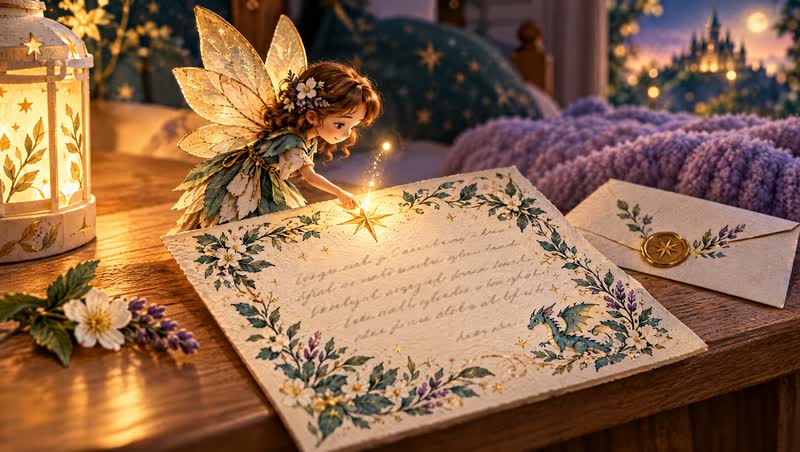
The best tooth fairy ideas are small, specific and low-effort: a short handwritten letter, a tiny receipt for one very sparkly tooth, a certificate, and one surprise under the pillow. Add your child's name and a detail from their day, and a 30-second note feels like real magic. Then keep a backup note in a drawer for the night the Tooth Fairy gets busy and forgets. Everything below works with paper, a pen and whatever small gift fits your family.
Quick answer: tooth fairy ideas at a glance
- A letter that names your child and praises something real.
- A tiny receipt that "buys" the tooth, with a funny condition report.
- A certificate that records the date and which tooth it was.
- One surprise under the pillow: coins, a small gift or a treasure hunt clue.
- A backup plan for the forgotten-visit night (see below).
How much does the Tooth Fairy leave?
Delta Dental has run its Original Tooth Fairy Poll every year since 1998, surveying more than 1,000 parents of children ages 6 to 12. As of November 2026, the page lists a U.S. average of $5.84 per tooth.
An average is a data point, not a rule. Families leave a dollar, a gold-colored coin, a sticker, a tiny book or a new toothbrush, and all of those are fine. Two practical tips: decide on your family's amount ahead of time, and keep it consistent between siblings so nobody feels the fairy plays favorites. If you want to make a first tooth extra special, you can give it a bigger celebration without a bigger price tag, like a certificate and a photo.
What should a Tooth Fairy letter say?
A great letter has five parts: your child's name, one piece of real praise, one detail about the tooth, a tiny mission or question, and a sweet sign-off. Here is a template for a first tooth:
Dear [Name],
What a brave wiggler you were! I found your tooth right where you left it, and it is so shiny I could see my wings in it. I'm adding it to the floor of my castle. You take wonderful care of your smile. Tonight's tiny mission: tell someone something kind about them.
Sweet dreams, Your Tooth Fairy
A few ways to make letters feel fairy-made:
- Write in tiny letters, or use your non-writing hand.
- Cut the paper to a little scroll size, about the size of a playing card.
- Use a gel pen in a color your child doesn't usually see around the house.
- For kids 7 to 9, swap the mission for a riddle or a simple code.
Two quick variations for bigger kids. For ages 7 to 9, end the letter with a riddle: "I have teeth but never bite, and I help you look your best. What am I?" (A comb.) For ages 10 and up, try a joking note, such as "Tooth quality: A-minus. Please floss more." Older kids often prefer humor to glitter.
Receipts, certificates and keepsakes
A tiny receipt is the easiest upgrade, and kids love the official tone:
- Item: 1 baby tooth (lower, front)
- Condition: Excellent, very sparkly
- Payment: [gift or coins]
- Notes: Outstanding wiggling
Add a Lost Tooth Certificate with the date, which tooth it was and a fairy signature. Then start a simple tooth log in a notebook: tooth number, date, where it fell out and what the fairy left. Years later, it is a sweet record of a gap-toothed era.
If you would rather skip the writing and printing, the Wonderkin Tooth Fairy Adventures Printable Kit bundles a letter, an adventure card, a little note, a Lost Tooth Certificate, a tiny tooth receipt, a first-lost-tooth memory card and a treasures envelope, personalized with your child's name.
What are some magical Tooth Fairy traditions?
Pick one or two, not all of them:
- A tiny door. Stick a small paper door on the baseboard near the bed.
- Fairy footprints. Dust a little flour on a tray and press tiny prints with your fingertip.
- A paper-star trail. Lay a few paper stars from the door to the pillow. Skip small trinkets if little ones are around.
- A tooth pouch. A small pillow or pouch with a pocket keeps the tooth from getting lost.
- A treasure hunt. Hide the coin and leave a clue. Our treasure hunt ideas can help.
- Fairy mail. Your child writes a note, and the fairy answers.
- A kindness mission. The fairy asks for one small kind act today.
- A gap-toothed portrait. A photo for the tooth log after every tooth.
- A healthy-habit gift. A new toothbrush from the fairy keeps the focus on brushing.
Traditions also differ around the world. According to Wikipedia's overview, in Spain and Latin America a mouse called Ratoncito Pérez does the job, drawn from an 1894 story by Luis Coloma written for a young King Alfonso XIII. In France, children leave teeth for La Petite Souris, the Little Mouse. In Japan, upper teeth are thrown straight down and lower teeth straight up so the new teeth grow in straight. If your child likes animals more than fairies, a tooth mouse is an easy swap.
Tooth fairy ideas by age
| Age | What works | Watch for |
|---|---|---|
| 4-6 | Tiny letters, footprints, a pouch, a certificate | Wiggly-tooth worries; reassure and celebrate |
| 7-9 | Riddles, codes, fairy mail, a treasure hunt | Questions about how it works; ask "What do you think?" |
| 10+ | A funny receipt, a thoughtful note, a helper role | Kids who are ready to help with a younger sibling's visits |
How do I keep the magic going for every tooth?
Kids lose baby teeth over several years, so plan for stamina, not a one-night show. Give the first tooth the full treatment (letter, certificate, receipt and a photo) and keep later visits light: a one-line note, a sticker or a new tiny mission. Rotate themes (a castle, a garden, a starry night) so each visit feels fresh without costing more effort.
A few other practical ideas:
- Siblings: write each child a separate note, even if the gift is the same.
- Travel: carry a spare note and a few coins in your travel bag, because the Tooth Fairy visits hotels too.
- The tooth itself: some families let the fairy keep every tooth, while others keep one special tooth in a tiny box. Either choice is fine.
- Two households: share the plan with the other grown-up so the fairy shows up consistently.
What if the Tooth Fairy forgets?
A missed night happens, and it is a small bump you can turn into a story. Try this:
- Stay calm. Kids take their cues from your face. Say, "Hmm, let's look together," and check the pillow, the floor and the bedside.
- Read a delayed-delivery note. Keep one in a drawer: "Dear [Name], I had so many teeth to collect last night that I ran out of time. Yours is next on my list. Please keep it where it is, and I will come tonight. Love, your Tooth Fairy."
- Or tell the cozy version. "Your tooth is so special she wanted to give it a proper visit, so she's coming tonight."
- Follow through tonight. Add a sorry-for-the-wait extra, like a sticker or a bonus note.
- Prevent a repeat. Set a phone alarm for 9 p.m. labeled "TF." Keep a go-bag (coins, a spare note and a receipt) in one place. Tell the other grown-up when a tooth gets wiggly, and add it to the calendar.
If your child asks why the fairy was late, answer with a question first: "What do you think happened?" Then enjoy their theory.
Dental and safety notes
The American Dental Association's MouthHealthy site says losing baby teeth is a natural part of growing up, that the permanent-tooth process starts around age 6, and that parents should reassure a worried child. It also recommends brushing twice a day with fluoride toothpaste, a pea-sized amount for ages 3 to 6, for at least two minutes. A fairy-themed brushing chart or sticker is a lovely way to reinforce it.
Keep the tooth in a small pouch or envelope rather than loose in the bed. And if there are children under 3 in the house, remember that the U.S. Consumer Product Safety Commission advises keeping small parts away from them, so put coins and tiny trinkets out of reach.
Make it magical with Wonderkin
The Tooth Fairy Adventures Printable Kit is a digital download personalized with your child's name, so you can print the letter, receipt and certificate at home. At the time of writing it is $20, and a separate Print & Mail Upgrade is available if you would rather have a printed set. Explore the tooth fairy collection for more.
Questions parents ask
How much does the Tooth Fairy leave per tooth?
Delta Dental's Original Tooth Fairy Poll, based on more than 1,000 parents of children ages 6 to 12, lists a U.S. average of $5.84 per tooth on its site as of November 2026. Treat that as a data point, not a rule. Pick an amount or gift that suits your budget and keep it fair between siblings.
What should I write in a Tooth Fairy letter?
Keep it short and specific: use your child's name, praise something real like brave wiggling or good brushing, add one detail about the tooth, and give a tiny mission or question. Sign off with a sweet closing. Writing in tiny letters or with your other hand helps it look like fairy handwriting.
What do I do if the Tooth Fairy forgets to come?
Stay calm, check around the pillow together, and read a delayed-delivery note: the fairy had a very busy night and will visit tonight, so keep the tooth where it is. Then follow through with a letter and treat. Keeping a backup note and some small bills in one spot prevents repeats.
When do kids start losing baby teeth?
The American Dental Association says losing baby teeth is a natural part of growing up and that permanent teeth start coming in around age 6. Every child's timing differs. If your child is nervous about a wiggly tooth, reassure them, and ask your dentist if you have questions about timing.
What do I say when my child asks if the Tooth Fairy is real?
A gentle first step is asking, 'What do you think?' and listening for what they are really wondering. Every family decides this in its own way and time. One gentle option is inviting older kids to become fairy helpers for younger siblings once they are ready.