Feelings & Growth
How Much Does the Tooth Fairy Leave? 2026 Poll + Ideas
In Delta Dental's 2026 Original Tooth Fairy Poll, the national average was $5.84 per lost tooth and $7.17 for a first tooth, up from $5.01 and $6.24 in 2025. That is an average from a survey of 1,000 parents of children ages 6 to 12, not a rule, so treat it as a benchmark. Below you will find the year-by-year numbers, regional rates, how many kids get something other than cash, a simple way to set your own family's amount, and ideas for nights when the fairy leaves a note and a clue instead of coins. For letters, receipts and what to do when the fairy forgets, see our guide to tooth fairy ideas.
Quick answer: the going rate in 2026
- Per lost tooth: $5.84 on average, up 17 percent from $5.01 in 2025.
- First tooth: $7.17 on average, up from $6.24. About 38 percent of parents say the fairy leaves extra for a first tooth.
- Not always cash: 32 percent of children received a physical gift in 2026, up from 19 percent in 2025.
- Your call: The poll describes what parents report, not what you should do. Pick an amount that fits your budget and stay consistent between siblings.
What did the 2026 Tooth Fairy poll find?
Delta Dental has run its Original Tooth Fairy Poll since 1998, when the average gift was $1.30. The 2026 survey asked 1,000 parents of children ages 6 to 12 between January 5 and January 15, 2026, with a stated margin of error of plus or minus 3 percent. Delta Dental released the results on February 25, 2026, according to its press release.
The headline: the average lost tooth was worth $5.84, which Delta Dental calls the first year-over-year increase since 2023, ending two years of decline. Delta Dental also notes that the 17 percent rise closely matched a 16 percent rise in the S&P 500 over the same period, a comparison it makes each year. It is a fun fact, nothing more.
How has the Tooth Fairy's rate changed?
| Year | Average per lost tooth | Average for a first tooth |
|---|---|---|
| 1998 | $1.30 | Not listed |
| 2023 | $6.23 | Not listed |
| 2024 | $5.84 | $7.09 |
| 2025 | $5.01 | $6.24 |
| 2026 | $5.84 | $7.17 |
These figures come from Delta Dental's press release archive and its 2025 release. "Not listed" means we did not find that figure in the releases we checked. We show only recent years here; Delta Dental's archive goes back to 1998.
How much does the Tooth Fairy leave by region?
| Region | 2026 average per tooth | Change from 2025 |
|---|---|---|
| Northeast | $6.45 | Up 41 percent |
| West | $5.99 | Up 5 percent |
| South | $5.89 | Up 3 percent |
| Midwest | $5.27 | Up 52 percent |
These regional figures were reported by FOX 13 from Delta Dental's 2026 results. With 1,000 parents split across four regions, each region rests on a smaller slice of the sample, so treat the gaps as rough, not strict rates.
Why do amounts vary so much from house to house?
- The tooth itself: A first tooth or a big wobbly one often earns a celebration.
- Family budget: Some families leave a dollar, some a few dollars, and some skip cash entirely.
- Siblings: Parents often use the same amount for every child to keep things fair.
- Friends and neighbors: Kids compare notes at school, which is one reason to decide on your own family's rule ahead of time.
- Two households: If your child sleeps at two homes, a quick chat between grown-ups keeps the fairy consistent.
What is a fair amount for our family? A 3-step method
- Choose a base you will not resent paying. The poll average is a reference, not a target. A dollar, a gold-colored coin or a small keepsake are all fair choices.
- Decide on milestone bumps. In the poll, 38 percent of parents said the fairy leaves extra for a first tooth. You might also plan something special for the last baby tooth.
- Add a non-cash layer. A short note, a tiny receipt or a clue to a treasure hunt makes a small amount feel big.
For a quick budget, multiply. As an illustration, not a prediction: ten teeth at the 2026 average of $5.84 would be $58.40 per child. Baby teeth are first shed at about age 6, molars between ages 10 and 12, and permanent teeth replace them by about age 13, according to the American Academy of Pediatrics, so those costs are spread across roughly seven years.
What can the Tooth Fairy leave instead of money?
The 2026 poll found that 32 percent of children received a physical gift. Here are low-cost ideas:
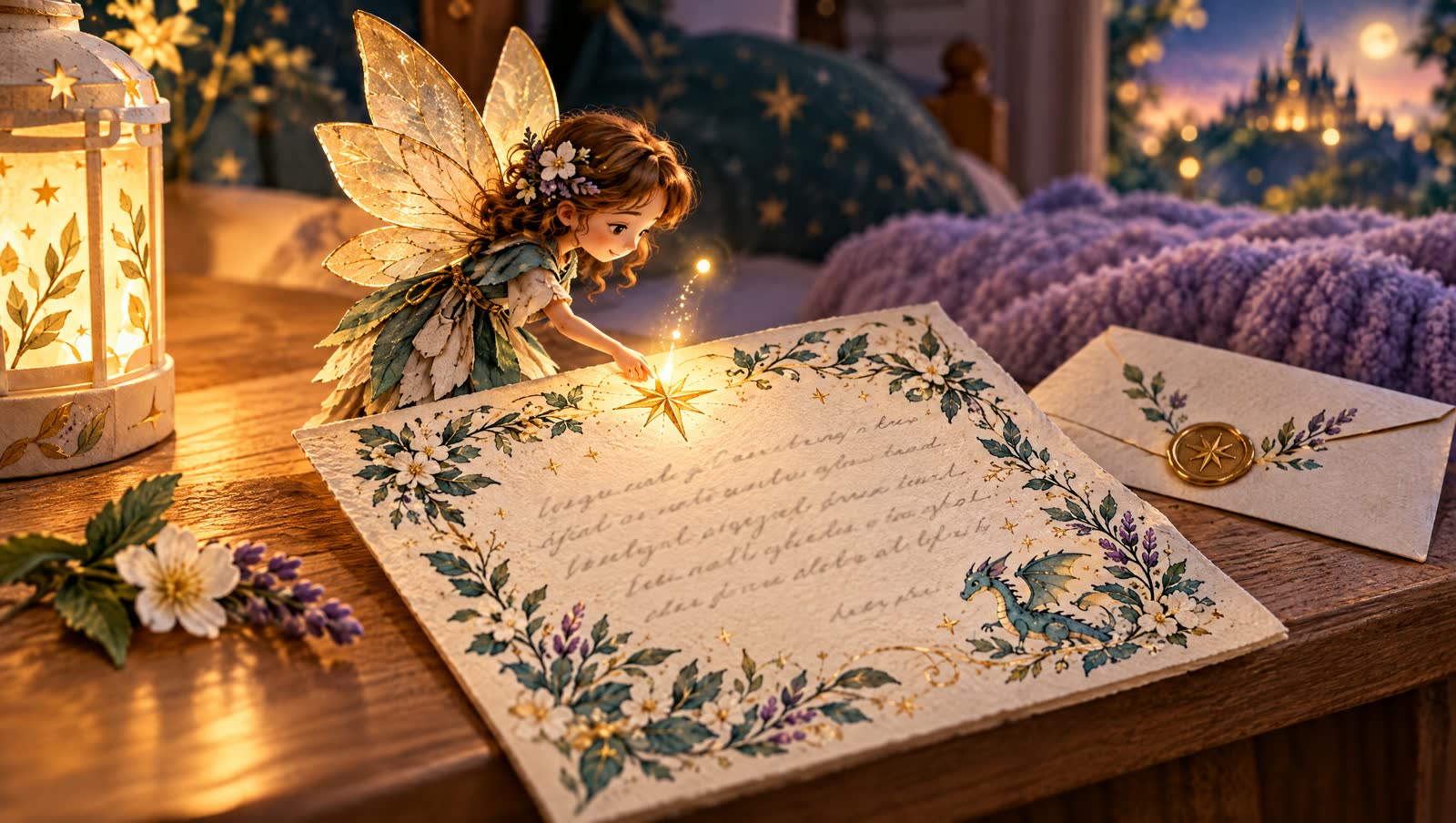
- A letter and a tiny receipt: Your child's name, a funny "condition report" and a signature.
- A small book or mini notebook: Slip it under the pillow with a bookmark note.
- A fun toothbrush: It keeps the focus on healthy teeth.
- A clue to a hunt: Leave a coin plus a riddle that sends your child to the kitchen to find the rest. Our birthday treasure hunt ideas have clue styles that work here too.
- A spend, save, give jar: Let your child split the fairy's coin three ways. Giving can feed a kindness habit; see our kindness activities by age.
- A coupon for something cozy: Extra story time, perhaps one made up on the spot with our bedtime story method.
If you would rather skip the writing, the Tooth Fairy Adventures Printable Kit includes a letter from the Tooth Fairy, an adventure card, a little note, a Lost Tooth Certificate, a Tiny Tooth Receipt, a First Lost Tooth Memory Card and a treasures envelope. Add your child's name in the personalization box. At the time of writing it is $20 as a printable kit, and you print it at home. Browse the tooth fairy collection for more.
Safety note: keep coins and small trinkets out of reach of children under 3.
Cash, a small gift or an experience: which is right?
| Option | Why families like it | Watch for |
|---|---|---|
| Cash or coins | Easy, familiar and simple to scale up for a first tooth | Amounts can creep up, and kids compare notes with friends |
| A small gift | Feels personal and keeps spending predictable | Clutter, and small parts if little siblings are around |
| A note plus an experience | Costs almost nothing and becomes a memory | Needs a little planning, like an extra story or a pancake breakfast |
Many families mix them: a coin, a note and one small surprise.
What if the tooth gets lost or swallowed?
It can happen, and the fairy has a plan. Have your child write a short note: "Dear Tooth Fairy, my tooth got lost, but here is where it fell out." Slip it under the pillow. The fairy can reply with a letter explaining that she knows exactly which tooth it was, and she can still leave the usual gift. A note like this also teaches kids that a small mishap can be handled calmly.
How do we remember the first lost tooth?
The first tooth is the one families photograph. Take a picture of the gap-toothed smile, write the date and which tooth it was on a card, and tuck it into a keepsake envelope. A simple tooth log in a notebook, with the date, the tooth and what the fairy left, becomes a funny record years later. A certificate and a receipt add the official touch kids enjoy.
What if the Tooth Fairy forgets?
It happens. Keep a delayed-delivery note in a drawer: "I had so many teeth to collect last night that I ran out of time. Please keep your tooth where it is, and I will come tonight." Then follow through that evening with a small extra. Our tooth fairy ideas guide has a full recovery plan.
When will these numbers change?
This page uses the 2026 poll, the latest we found as of November 2026. Delta Dental's release list shows results published each February, so a 2027 update is likely early next year. Once the new numbers are out, you can expect the averages here to be refreshed.
Make it magical with Wonderkin
Wonderkin Adventures is a small shop run by a working mom and veterinarian who loves her daughter. Our Tooth Fairy Adventures kit turns a lost tooth into a small keepsake story, with a certificate, a receipt and a memory card for the first one. See the tooth fairy collection, or read about the kit on Etsy.
Questions parents ask
How much does the Tooth Fairy leave for a first tooth?
In Delta Dental's 2026 Original Tooth Fairy Poll, the average for a first lost tooth was $7.17, up from $6.24 in 2025. About 38 percent of parents said the Tooth Fairy leaves extra for the first tooth. Many families mark the day with a letter or certificate too.
How much does the Tooth Fairy leave per tooth in 2026?
Delta Dental's 2026 poll, which surveyed 1,000 parents of children ages 6 to 12 in January 2026, found an average of $5.84 per lost tooth, up 17 percent from $5.01 in 2025. Treat that as a reference point, because every family sets its own amount.
Does the Tooth Fairy always leave cash?
No. In the 2026 poll, 32 percent of children received a physical gift, up from 19 percent in 2025. Popular non-cash options include a small book, a sticker sheet, a fun toothbrush, a letter with a tiny receipt, or a note that sends your child on a clue hunt.
Does the amount differ by region?
Yes, in Delta Dental's 2026 poll. The Northeast averaged $6.45, the West $5.99, the South $5.89 and the Midwest $5.27. Each region's figure rests on a smaller slice of the 1,000-parent sample, so treat regional gaps as rough guides, not strict rates.
How much should I leave if I have several kids?
Pick one amount and keep it the same for each child so nobody feels the fairy plays favorites. Decide ahead of time, and consider a small bump for a first tooth. If budgets feel tight, a letter, a gold-colored coin or a tiny keepsake makes the visit feel special.
When do kids start losing teeth?
According to the American Academy of Pediatrics, baby teeth are first shed at about age 6, starting with the front teeth. Molars are usually shed between ages 10 and 12, and permanent teeth replace them by about age 13. Every child's timing differs, so ask your dentist if you have questions.
Sources
- Delta Dental: Original Tooth Fairy Poll press releases (average value of a lost tooth, 1998 to 2026)
- Delta Dental of Virginia: The Tooth Fairy gives kids a raise (2026 poll release, Feb. 25, 2026)
- Delta Dental of Massachusetts: The Tooth Fairy is on a budget (2025 poll release)
- FOX 13 Tampa Bay: The Tooth Fairy is paying out more than last year, survey finds (2026 regional figures)
- American Academy of Pediatrics (HealthyChildren.org): When children begin to lose their baby teeth