Gift Guides
Easter Basket Ideas Without Candy: An Adventure Edition
The easiest Easter basket without candy comes from five simple categories: something to read, something to make, something to explore, something to wear, and something to keep. Pick one or two items from each, match them to your child's age, and finish with a handwritten card. Easter 2027 falls on Sunday, March 28, according to The Old Farmer's Almanac, which gives you plenty of time to shop slowly and avoid last-minute stress. Because Easter is a religious holiday for many families, adapt the ideas to your own traditions.
Below you will find ideas for ages 1 to 3, 4 to 7, and 8 to 12, an "explorer basket" theme, allergy and safety notes, and budget tips.
Quick answer: the five-category formula
| Category | What it means | Examples |
|---|---|---|
| Read | A story to curl up with | Board book, picture book, chapter book |
| Make | Something to create | Crayons, play dough, a craft kit, a sketchbook |
| Explore | A reason to go outside | Bubbles, sidewalk chalk, seeds, a kite |
| Wear | Something to put on | A sun hat, fun socks, rain boots |
| Keep | A keepsake | A handwritten card, a journal, a certificate |
Choose about six to eight items in total. A basket does not need to overflow to feel special.
What are the best ideas for ages 1 to 3?
Toddlers need big, safe, simple things. Skip anything with small parts, and supervise play.
- Read: A sturdy board book or a cloth book
- Make: Chunky crayons, big washable markers, or play dough (many doughs contain wheat, so check the label)
- Explore: Bubbles, big sidewalk chalk, or a little watering can for the garden
- Wear: A sun hat or a pair of silly socks
- Keep: A soft bunny and a handwritten note to read together
What are the best ideas for ages 4 to 7?
This is the sweet spot for imagination, so lean into pretend play and projects.
- Read: A picture book series they can ask for again and again
- Make: A sticker book, a simple craft kit, or paper and safety scissors
- Explore: A seed packet and a pot to grow something, a kite, or a jump rope
- Wear: Rain boots or a cape for adventure days
- Keep: A small journal with the first page started by you
What are the best ideas for ages 8 to 12?
Older kids appreciate being treated as capable, and many like a basket that feels "grown up" without being babyish.
- Read: A chapter book or a graphic novel
- Make: A sketchbook with colored pencils, or a friendship bracelet kit
- Explore: A compass, a magnifying glass, or garden gloves and seeds
- Wear: Hair accessories, a favorite team hat, or a pair of cozy socks
- Keep: A journal, a certificate, or a card with a personal message
The Food Allergy Research & Education (FARE) nonprofit lists many non-food ideas across ages, including books, bubbles, sidewalk chalk, stickers, puzzles, and, for older kids, hair accessories and gift cards (FARE).
How do I build an "explorer basket"?
If your child loves adventure, make the basket an expedition kit. Here is a simple checklist:
- A small notebook and a pencil
- A magnifying glass for bugs, leaves, and rocks
- A compass or a hand-drawn map of your yard or neighborhood
- A packet of seeds to plant
- A pair of gloves or a sun hat
- A card naming your child an Official Explorer
Then use the basket as the finale of a hunt. Our guide to an Easter treasure hunt for kids shows how to build a twelve-clue trail that ends at the basket. For a nature adventure with the new gear, try a spring nature scavenger hunt.
How do I keep the basket allergy friendly and reusable?
- Go non-food. FARE reminds families to check ingredients, even in non-food items, and notes that not every item is suitable for a child with a latex allergy (FARE).
- Think reusable. A cloth tote, a sand pail, or a wooden crate can be used again next year, and later it can hold library books or art supplies.
- Fill with paper. Crinkled paper or a cloth napkin makes a soft nest without plastic grass.
- Share the plan. If other relatives are filling baskets, tell them about allergies and the no-candy plan so everyone can follow it.
What safety notes should I keep in mind?
The Consumer Product Safety Commission advises keeping small balls and toys with small parts away from children younger than 3, because they are choking hazards, and keeping balloons away from children younger than 8. It also says to keep high-powered magnets and button or coin batteries away from young children (CPSC). Federal rules also ban small parts in products intended for children under 3 (CPSC).
In homes with mixed ages, store older siblings' items out of reach, and open the baskets together so you can supervise.
How do I put the basket together?
Start with a soft nest of crinkled paper or a cloth napkin. Stand books and flat items at the back, place the biggest item in the middle, and tuck small things in front. Add a name tag, then hide the basket as the finale of a hunt, or set it by the bed for a quiet Easter morning. Take a quick photo before little hands dig in. If you hide the basket, make sure each child knows to wait for a grown-up before searching anywhere unsafe.
What if my kids are very different ages?
Keep one shared theme and change the level. Everyone gets a notebook, for instance, but the toddler's comes with chunky crayons and the ten-year-old's with colored pencils. Label each basket with a name, and keep small-part items in the older child's basket out of the toddler's reach. A single family hunt that ends at all the baskets lets everyone celebrate together.
How much should I spend?
Decide on a total first, then divide it. Many families choose one "main" item, like a book or craft kit, and several small things. Keep the card, the certificate, and the hunt: those cost little and are often what kids remember. For more ideas beyond Easter, see our guide to best personalized gifts for adventurous kids, or use the Adventure Finder to match a gift to your child.
What is one small, meaningful thing to add?
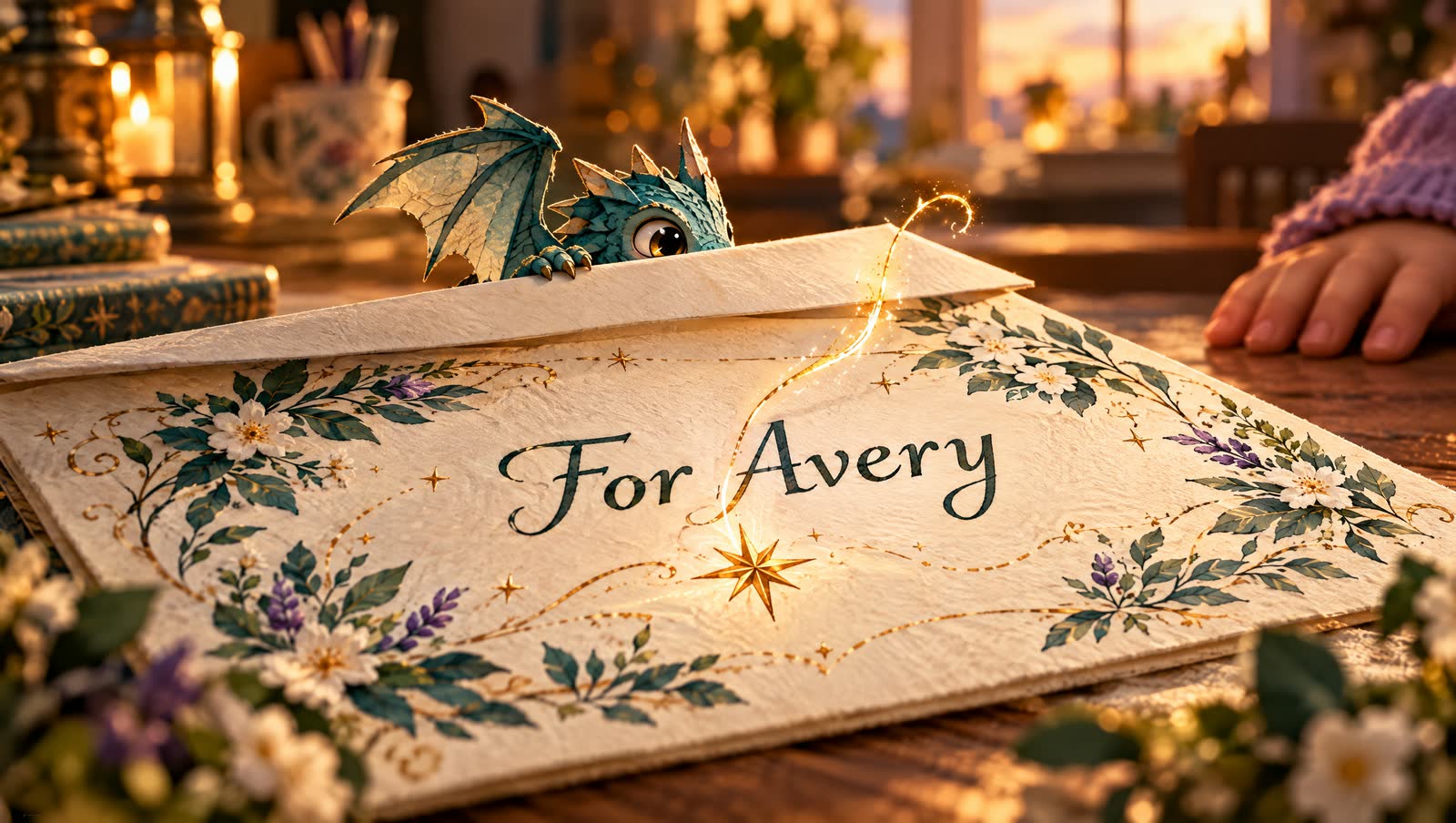
A card. Write two or three sentences about something you noticed this year: a new skill, a kind moment, a funny phrase. It becomes a keepsake they can reread.
Our Magical Moments greeting cards are blank, watercolor-style cards, 4 x 5.6 inches, in six designs. At the time of writing they are $6.50 each, with a set of all six available. They are not Easter-specific, but designs like Unicorn's Meadow and Fairy Garden feel springlike, and the blank inside leaves room for your own words.
If a wobbly tooth is on the horizon, the Tooth Fairy Adventures printable kit can be a fun surprise to tuck in for later. It includes a letter from the Tooth Fairy, a mission card, a lost tooth certificate, and keepsake pieces, and you print it at home. For more ideas, see our tooth fairy ideas for kids. And for a stretch of screen-free fun after the basket, browse screen-free activities for kids.
Make it magical with Wonderkin
A handwritten card turns any basket into a keepsake. Our Magical Moments cards come in six storybook designs, from Unicorn's Meadow to Moonlight Dragon, with blank insides for your own words. Browse our greeting cards, or let the Adventure Finder point you to a kit that fits your child.
Questions parents ask
What can I put in an Easter basket instead of candy?
Think read, make, explore, wear, and keep: a book, a craft or play dough, bubbles or sidewalk chalk, a hat or fun socks, and a handwritten card. Choose items by age, and skip anything with small parts for children under 3.
What are good non-candy Easter basket ideas for toddlers?
Board books, a soft bunny, chunky crayons, bubbles, big sidewalk chalk, a small watering can, and a sun hat all work. Choose pieces too big to be a choking hazard, supervise play, and check play dough labels, because many doughs contain wheat.
How do I make an Easter basket allergy friendly?
Go non-food and check ingredients even on non-food items. Some play doughs contain wheat, and certain items are not suitable for a child with a latex allergy. Books, bubbles, chalk, seeds, and stickers are common non-food choices. Ask the child's doctor if you are unsure about an item.
How much should I spend on an Easter basket?
It is entirely your call. A few well-chosen items can feel magical. Mix one or two bigger pieces, such as a book or a craft kit, with several small ones. Reuse the basket year after year, and add a handwritten card, which costs very little.
What is an explorer Easter basket?
It is a basket built around an adventure theme: a magnifying glass, a small notebook, a pencil, a map or compass, seeds to plant, and a note naming your child an Official Explorer. Pair it with a clue hunt, and the basket becomes the treasure at the end.
What should I avoid in an Easter basket for young kids?
Avoid small parts for children under 3, and keep balloons away from children under 8. High-powered magnets and button batteries should stay away from young children entirely. Check age labels, and supervise opening and play, especially when younger and older siblings share toys.