Advent
Elf on the Shelf Alternatives: Low-Stress Christmas Traditions

The best Elf on the Shelf® alternatives keep the part kids love, a daily dose of surprise and North Pole magic, without the nightly hiding spots. Try a letter from Santa, a kindness countdown, an advent passport, or shoes-on-the-windowsill treats. And if your family loves the elf, keep him. Consider this a menu, not a verdict.
Key takeaways
- Keep the magic, change the effort. Choose one-time, weekly, or kid-led traditions instead of a nightly setup.
- Nothing here is a criticism of elf families. Plenty of households enjoy the game.
- Mix and match. One big surprise plus one small daily ritual is usually enough.
- Retire the elf kindly with a goodbye note if you decide to move on.
Why do some families look for alternatives?
According to Wikipedia, the tradition began with a 2005 picture book by Carol Aebersold and her daughter Chanda Bell. The premise: a scout elf flies to the North Pole each night to report to Santa, returns to a new hiding spot each morning, and children aren't supposed to touch it. The brand's own site describes the elf as an interactive hide-and-seek game (official site).
Families look elsewhere for a few reasons. The nightly staging is a daily job. Some critics, such as philosopher David Kyle Johnson in Psychology Today, have argued that the report-to-Santa premise leans on deception and rewards to steer behavior. And some parents simply want a different flavor of magic. None of that is a reason to stop if the elf works for you.
Elf on the Shelf® is a trademark of CCA and B, LLC, d/b/a The Lumistella Company. Wonderkin Adventures is not affiliated with the brand.
What does the elf get right?
A morning surprise, a character who feels like part of the family, and a reason to talk about Christmas every day. Those are worth keeping. The alternatives below borrow those strengths and trade the nightly setup for something lighter.
If you love the elf, which alternative fits?
| What you love about the elf | Try instead | Effort |
|---|---|---|
| The morning surprise | Yule Lad shoes or a North Pole note | 2 minutes |
| The Santa connection | A personalized letter from Santa | One time |
| The daily ritual | An advent passport or kindness countdown | 10–25 minutes |
| The cozy character | A stay-put plush Christmas buddy | None |
Should the magic be one-time, weekly, or daily?
| Style | Examples | Parent time |
|---|---|---|
| One-time | Letter from Santa, Christmas Eve box | 5–15 minutes, once |
| Weekly | Three North Pole notes, a weekend countdown activity | About 10 minutes a week |
| Daily | Advent passport, kindness countdown | 10–25 minutes, kid-led |
One big surprise plus one small ritual is usually plenty. Those two cover the whole month.
How do you choose in 60 seconds?
- Two minutes a night? Try Yule Lad shoes or the three North Pole notes.
- One free evening in total? Order a letter from Santa and build a Christmas Eve box.
- A child who loves projects? Go for an advent passport, or pick fillers from our non-chocolate advent calendar ideas.
- Want kindness at the center? Run a kindness countdown and add a weekly treat.
- Still love the elf? Keep him, and use the tips below.
10 low-stress Elf on the Shelf alternatives
- A letter from Santa. One beautiful surprise can do the work of 24 hiding spots. Wonderkin's Personalized Letter from Santa bundle weaves in your child's name, age, and something they're proud of, with a Nice List certificate. The printed set arrives at your door, not theirs, so you place the magic yourself. See the Santa letter mailing deadlines for timing.
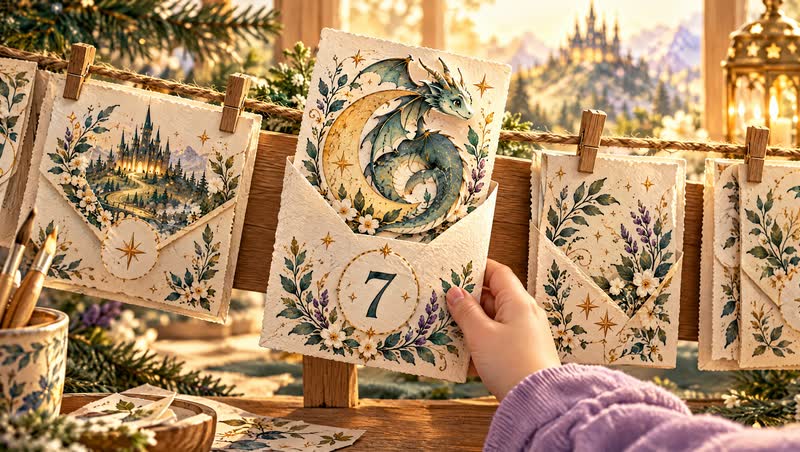
- A 24-day advent passport. Your child discovers a clue, does a mission, and adds a sticker, so the adventure is theirs instead of something you stage. Try the Around the World Advent Calendar Passport, or read what an advent passport is.
- A kindness countdown. Swap hiding spots for small acts: a note for a neighbor, a toy to donate, a thank-you for a helper, a cookie for the mail carrier. Write them on 24 slips of paper and draw one each morning, so your child picks the kindness. See kindness activities for kids by age.
- Yule Lad shoes. In Iceland, 13 Yule Lads arrive one at a time between December 12 and 24, each with a funny name like Spoon Licker or Door Slammer, and children set a shoe on the windowsill for a small gift. Borrow it with a sticker, a note, or a clementine.
- Porridge for the nisse. In Nordic folklore, a household spirit called the nisse, or tomte, expects a bowl of porridge with a pat of butter on Christmas Eve. One bowl, one night, one story.
- A Christmas Eve book. Iceland's Jólabókaflóð, the Christmas Book Flood, makes books the most popular gift, given on Christmas Eve. The custom took off in 1944, when postwar currency rules made paper easier to import than other gifts. Wrap one new book per child and read together.
- A stay-put Christmas buddy. Let a plush reindeer or gnome join the family on December 1 and settle by the books or the tree. Kids can cuddle it any time, and it never needs moving.
- Three notes from the North Pole. Instead of nightly notes, leave three short, kind ones: December 1, December 12, and Christmas Eve.
- Reindeer food. On Christmas Eve, scatter a handful of plain oats on the lawn and call it a snack for the reindeer. Skip the glitter.
- A Christmas Eve box. Pajamas, a new book, and a small treat, opened the night before. One box, one night, one cozy ritual.
What does the budget look like?
Costs are rough estimates.
- Free: Yule Lad shoes with a note, a kindness countdown, North Pole notes, and a library book for Christmas Eve.
- A few dollars: oats for the reindeer, a plush buddy, and a Christmas Eve box built from things you own.
- Paid kits: a letter from Santa or an advent passport, if you would rather not plan the days yourself.
How can you keep the elf with less stress?
- Make a list. Write ten easy hiding spots on an index card and rotate through them.
- Pre-write notes. Ten short notes will last the month.
- Allow rest days. A sign saying the elf is resting on busy nights is enough.
- Keep it kind. The official site describes a hide-and-seek game, so you can focus on fun and kindness rather than reporting behavior.
- Skip the comparison. Elaborate scenes online are optional. Two minutes is plenty.
How do you retire the elf gently?
- Write a goodbye note from the elf: he has finished his work and is heading north to help Santa.
- Leave a tiny treat or a thank-you.
- Start the new ritual the next morning, so there is still something to look for.
A simple goodbye note might read: "Dear [child's name], I had so much fun visiting you. My work here is done, and Santa needs me back at the North Pole to help wrap presents. Keep being kind and curious. Love, Your Elf." Add your child's name and a tiny treat.
What if your child isn't ready to say goodbye?
Try a weekend elf. Instead of moving him every night, let him appear only on Saturdays and Sundays, or on a few special dates like December 1, December 12, and Christmas Eve. Kids still get the thrill of the search, and you get five nights a week back. Then, when you are ready, shift to one of the traditions above.
What do you say when friends have an elf?
Kids compare notes. A kind, simple answer works: "Every family has different traditions. Ours has Yule Lad shoes." Then point to what your family does. Because there is no single right way to do Christmas, there is nothing to defend.
What might a December without the elf look like?
- December 1: Start the advent passport and leave the first North Pole note.
- December 12: Set out the first Yule Lad shoe.
- Saturdays: Pick a Christmas countdown activity.
- December 24: Open the Christmas Eve box, scatter the reindeer food, and read the new book.
Make it magical with Wonderkin
Wonderkin Adventures is a small shop run by a working mom and veterinarian who loves her daughter, making screen-free keepsakes for kids. Our Santa letter bundle and 24-day advent passports are designed to make December magical without a nightly to-do list. At the time of writing, the passports are $28 (regularly $40). Browse the advent calendars collection.
Questions parents ask
What is a good alternative to Elf on the Shelf?
Try a single personalized letter from Santa, a 24-day advent passport, a kindness countdown, or shoes-on-the-windowsill treats inspired by Iceland's Yule Lads. Most keep the surprise and a regular ritual without moving a doll every night.
Is it okay not to do Elf on the Shelf?
Yes. The picture book that launched it came out in 2005, so it's a modern, optional tradition. Keep the parts your family loves, such as surprise, magic, and daily connection, and skip the rest. Christmas has no required rituals.
How do I stop doing Elf on the Shelf after starting?
Let the elf 'graduate' with a goodbye note saying he has finished his work and is heading to the North Pole to help. Replace him with a new ritual, such as a letter from Santa or a kindness countdown, so there is still something to look forward to each morning.
How can I make Elf on the Shelf less stressful?
Keep a list of ten easy hiding spots, pre-write a stack of short notes, and let the elf 'rest' on busy nights with a sign. Skip elaborate scenes from social media, and focus on fun rather than reporting behavior. Two minutes is plenty.
Does a letter from Santa count as an Elf on the Shelf alternative?
It can. A personalized letter from Santa gives your child a one-time surprise to look forward to, with no nightly setup. Pair it with a daily activity, like an advent passport, if you want an every-day ritual too.
Sources
- Wikipedia: The Elf on the Shelf (origin, premise, commentary)
- The Elf on the Shelf official site (description and trademark notice)
- Psychology Today: Let's Bench the Elf on the Shelf (David Kyle Johnson, 2012)
- Wikipedia: Yule Lads (Iceland)
- Wikipedia: Jolabokaflod (Icelandic Christmas Book Flood)
- Wikipedia: Tomte / nisse (Nordic folklore)
- Wonderkin Adventures listing: Personalized Letter from Santa bundle
- Wonderkin Adventures listing: Around the World Advent Calendar Passport